

Chicago has always been a city that makes things.
Steel and skyscrapers. Food and music. Businesses, neighborhoods, and ideas. Chicago grew into a manufacturing powerhouse because people came here ready to work, build, and create. Its location in the heart of the Midwest also connected the city to agriculture and food production, while generations of musicians helped turn Chicago into a place where sounds brought from elsewhere could grow into something distinctly local.
That history is part of what makes Chicago such a natural setting for craft distilling. But for Beats, Beds & Browns founder Joe Skibbie, Browns isn’t just about what’s in the bottle.
It’s about the people behind it.
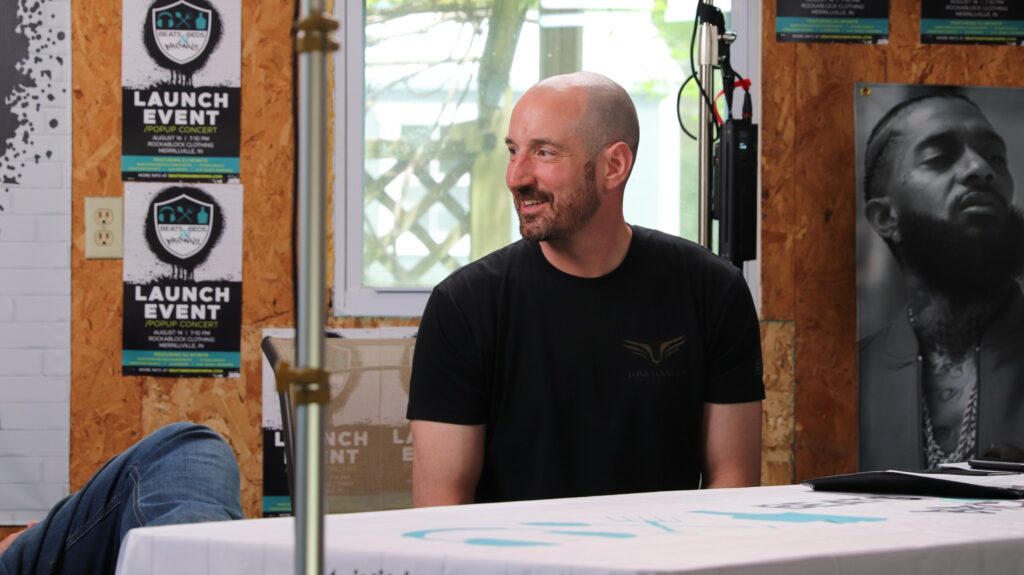
The Story Behind Beats, Beds & Browns
Beats, Beds & Browns didn’t begin with a carefully mapped-out business plan. As Skibbie has shared before, a friend challenged him to start a podcast.
With a background in digital marketing, business, and leadership, Skibbie knew a bit about building things. The bigger question was what he could talk about without running out of things to learn.
The answer came from three interests already in his life: hip-hop, gardening, and brown spirits.
Over the years, BBB has grown into what Skibbie describes as a small-business podcast for creatives. Musicians, growers, distillers, entrepreneurs—they may be making very different things, but the conversations often come back to the same questions.
- How do you take something you care about and build something from it?
- How do you make it sustainable?
- How do you reach people?
- What can you learn from the people doing it differently than you?
Skibbie sees plenty of Chicago in these questions.
“Chicago’s blue-collar mentality and freewheeling entrepreneurial spirit are all part of these endeavors,” he says.
There’s Work Behind What We Enjoy
His experience with small businesses and startups also impacts how Skibbie looks at a bottle of whiskey.
What does he respect about distilling? “Determination and patience.”
A clear whiskey or rye goes into a charred oak barrel and then must wait. As it rests over months and years, its surroundings begin to change it. Depending on the grain, barrel, time, and other variables, flavors like vanilla, honey, chocolate, fruit, and smoke can begin to emerge.
Skibbie sees something familiar in that process.
“The things that you’re absorbing and that are surrounding you are what is shaping you, just like the whiskey is surrounded and shaped by that charred oak.”
There’s the whiskey itself, but there’s also everything that happened before it reached your glass: grain selection, fermentation, distillation, barrels, time, experimentation, and a lot of decisions by the people making it. The more you know about those things—and those people—the more interesting the experience becomes.
“I’ve experienced that for myself, and I’ve witnessed it in others. The sum of many decisions made by us and others, plus the absorption of our surroundings, makes us into who we are and what we aim for,” Skibbie says.
Makers Have More in Common Than We Think
A musician, a market gardener, and a craft distiller may not look like they have much in common; Skibbie has learned to see the connecting threads.
On the podcast, he’s talked with musicians about the realities of building a career when live performances alone probably aren’t going to pay the bills. That leads to questions about streaming, merchandise, and other ways to build a sustainable business around the music.
Distillers face their own version of those choices. Do you contract out production and concentrate on building the brand? Or do you obsess over the details, right down to the grain profile and the experience around the finished spirit?
Growing food faces the same challenge. Producing something is one thing. Figuring out how to make the operation work and connect people with what you’ve grown is another.
Those practical questions are part of what has made BBB’s three subjects increasingly connected for Skibbie.
“I’m interested in the music, the garden, and the whiskey. But I’m also interested in who is doing the work and how they’re making it work,” Skibbie says.
One of the People Who Said Yes in Season One
As Beats, Beds & Browns prepares for Season Eight, Skibbie has been looking back at some of the people who agreed to sit down with him in Season One—back when the podcast was still a new idea.
One of them was Paul Hletko, founder of FEW Spirits in Evanston.
Hletko spent nearly two decades practicing law before turning to distilling. A rock-and-roll fan and musician, he had also run a record label and made guitar effects pedals. But the roots of FEW Spirits reach even further back.
His grandfather’s family owned a brewery in what is now the Czech Republic. When Germany invaded in 1939, the brewery was taken, and the family was sent to concentration camps. Hletko’s grandfather survived; the relatives imprisoned with him did not. Years later, Hletko said preserving a piece of that family history helped draw him toward distilling.
He went on to build FEW Spirits into a brand distributed in 30 countries across four continents and became a leader in the craft-distilling industry.
That’s a lot of story behind one bottle—and exactly the kind of story that has stuck with Skibbie since Season One and continues to inspire him seven seasons later.
“We all feel the weight of our nine-to-five,” Skibbie says. “Seeing someone take their passion and turn it into a business is part of what all of us makers, entrepreneurs, and artists are chasing.”
There’s much more to Hletko’s story. Listen to Skibbie’s conversation with the FEW Spirits founder.
It’s All About the Story
Knowing those stories changes the experience for Skibbie.
When asked if knowing where a whiskey came from or who made it changes how he enjoys it, his answer is immediate: “100%.”
He compares it to growing his own food. There’s joy in knowing the story behind the meal, what went into growing it, and sometimes knowing his own hands were involved. With a spirit, he wants to know who crafted it, where they’re from, what grains went into it, and the story behind the brand.
“I mean, it’s all about the story. If you don’t have a story to go with it, you know, why am I spending 50 bucks on a bottle of brown spirit that I know nothing about?”
Growing your own food changes your relationship with what lands on your plate. Getting to know an independent artist can change the way you experience their music. Meeting the person who distilled a whiskey can do the same when you pour a glass.
The product hasn’t changed, but your connection to it certainly has. And Skibbie’s connections have only deepened over the years with the people and passions behind Beats, Beds & Browns.
Chicago Is the People Who Make It
Beats, Beds & Browns fits directly into the story that is Chicago.
During the Great Migration, Black musicians brought Southern blues traditions north. In Chicago, those traditions met a different environment—clubs, crowds, record companies, other musicians, and city life—and helped develop the blues culture associated with Chicago.
But Skibbie puts the larger idea much more simply:
“Chicago is the people who make it.”
He sees this firsthand when he’s out in these spaces. At a music venue, he ends up talking with people he’s never met. In the garden, he’s either giving someone a tour or getting one himself. Distilleries create many of those same opportunities.
“So that community,” Skibbie says, “is also a throughput of Beats, Beds & Browns and the things that we foster. These people and dreams, they go together, and they’re a vital part of telling this ever-growing story of Chicago and its contributions to the world.”
Skibbie rarely meets someone who loves gardening, brown spirits, and music with an equal passion. But give him just one out of three, and he’ll find a way to begin a conversation.
“And that’s what Chicago is to me, that story that’s just inside the next conversation. You never run out of them.”
Share the Good Stuff
Skibbie loves seeing his three passions intersect.
“I remember I once introduced someone to an underground artist BBB has interviewed and hearing later that the person became a fan,” Skibbie recalls. “I like swapping notes about what grew well in my garden with other gardeners. And if I meet a distiller and I learn where the spirit was made, when I find someone who I think will enjoy that brand, I’m probably going to pour them a glass and tell them the story behind it.”
Three different subjects, but behind the music, food, and brown spirits are just people making things, learning as they go, building businesses, and putting something of themselves into what they create.
“When you get to know the people, and you get closer to the story,” Skibbie says. “If my retirement can be gardening, going to concerts—maybe even documenting my experiences there—and then sharing brown spirits with friends, that sounds like a pretty optimal retirement to me.”
Want to hear more amazing stories from makers in the Chicago area? Listen to the Beats, Beds & Browns podcast for more gardening news, practical ideas, food conversations, music, culture, and stories from people doing the work. You can find us on iHeartRadio, Apple Podcasts, and Spotify.

